
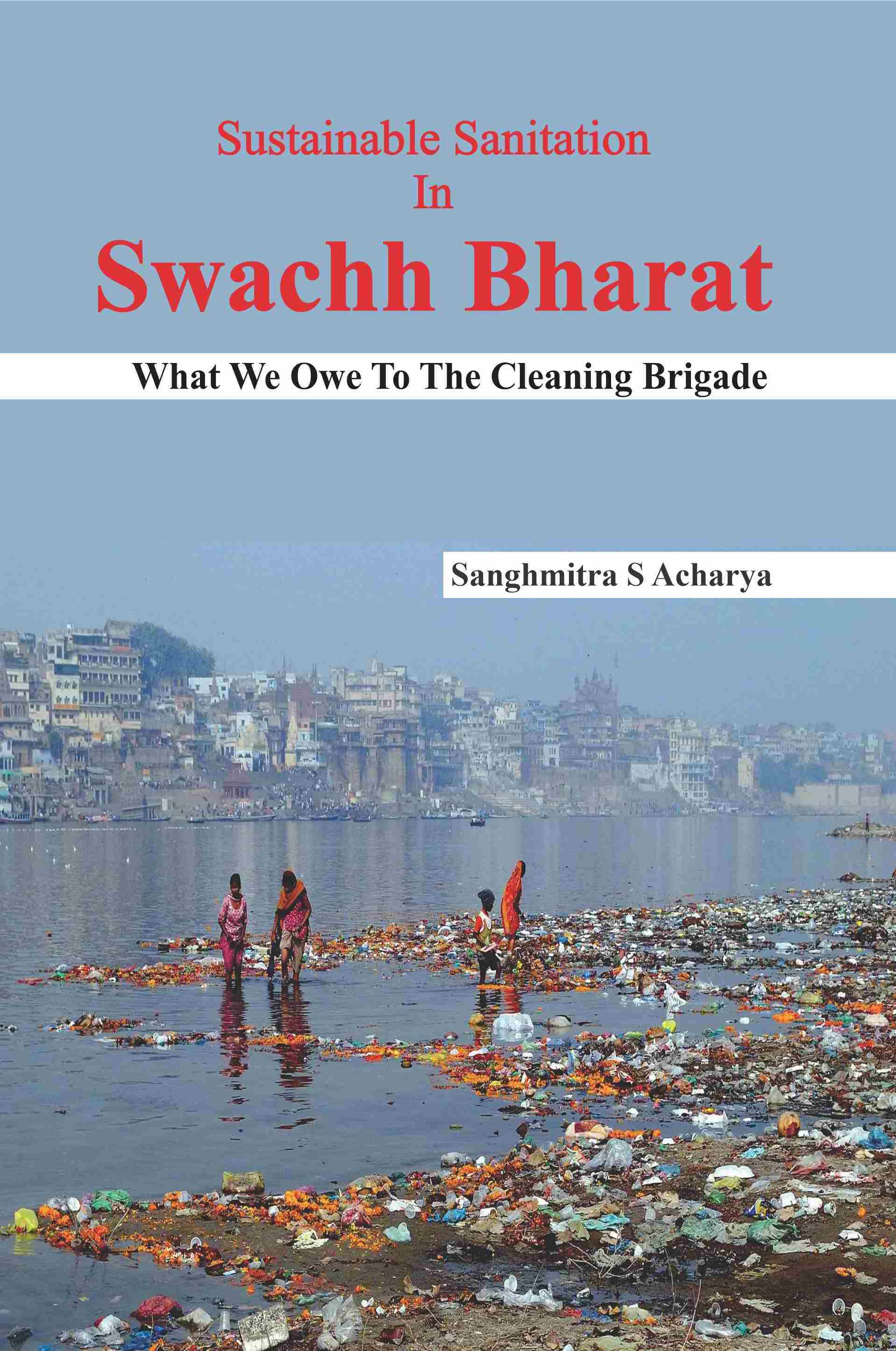
In response to a question in Lok Sabha on July 19, 2022, the then Social Justice and Empowerment Minister Virendra Kumar had informed that in the last five years, 347 sanitation workers died while cleaning sewers and septic tanks. Uttar Pradesh, Tamil Nadu and the national capital Delhi accounted for 40% of these fatalities. Many organizations fighting for the sanitation workers refuted the number of deaths given by the minister. According to them the figure was more than 500. Perceptibly, this is a dark reality of India. Especially, when it is celebrating 75 years of its independent existence amidst Azadi ka Amrit Mahotsav. Condition of persons engaged in cleaning occupations demands serious discussion. Why the ones cleaning the dirt of others, are forced to live in the very dirt itself? What is the compulsion to do this work, which is hazardous and has so much risk of death? This research study objectively investigates all these questions. This book is nothing less than a gift for the curious ones, who want to read more on this subject. Hemendra Mishra, Delhi based Journalist This study has brought out that proper safety equipment, training, and provisioning of basic amenities needs to be prioritised for the workers engaged in cleaning the cities. Instead of caste based occupational assignment, work should be done by anyone in a modern way so that a large section of Dalits are saved of the disrespect and belittling caused due to traditional occupation. This study induced into Dalit youth the idea of acquiring education and need to get out of the clutches of the caste based occupation. The question of dignity-of work and of person, unfolds systematically in this study. The Campaign is sincerely appreciative of this study. Hemlata Kansotia, Convener-National Campaign for Dignity and Rights for Sewerage and Allied Workers (NCDARSAW) 'Thank you Didi! Through my story you have weaved a question which we need to answer...why do we have to continue doing this inhuman job...' (Translated from her original words). Vaani (Name changed) First Respondent and inspiration for the present work
Sanghmitra S Acharya started her teaching career at the International Institute for Population Sciences, Mumbai in 1990 and subsequently, in 1999, joined the Centre of Social Medicine and Community Health in Jawaharlal Nehru University, New Delhi. She was also Director, Indian Institute of Dalit Studies, New Delhi, Visiting Fellow at institutions outside India like Chinese Academy of Social Sciences (CASS), Beijing; Ball State University, USA and University of the Philippines (UPPI), Manila; East West Center, Honolulu and University of Botswana. She works on issues of health in context of social inclusion, discrimination; youth; gender; urban spaces and their intersections. Her recent works include Caste, Covid and Inequalities of Care- Lessons from South Asia (2022); and Mapping Identity-induced Marginalisation in India - Inclusion and Access in the Land of Unequal Opportunities (2022) by Springer. Her research on cleaners and cremation workers is under consideration for publication.
Preface Acknowledgement List of Figures List of Tables Chapter 1. The Cleaning Brigade- Who and How? Chapter 2. Sustainable Health and Cleaning Brigade Chapter 3. Government Initiatives for Sanitation Workers Chapter 4. Swacha Bharat Abhiyan (SBA) and the Persons Engaged In Cleaning Occupation (PECO)- Connects and Disconnects Chapter 5. Sanitation Facilities and Workers Chapter 6. Youth engaging in Sanitation, Sewer and Allied Works Chapter 7. How do they die? Health, Lifestyle habits and Morbidity Chapter 8. Dignity of Persons Engaging In Cleaning Occupations- State Response Chapter 9. Summarizing Where India will go- Pathways Ahead Chapter 10. Epilogue- Sanitation workers and COVID-19 References

$280.00