
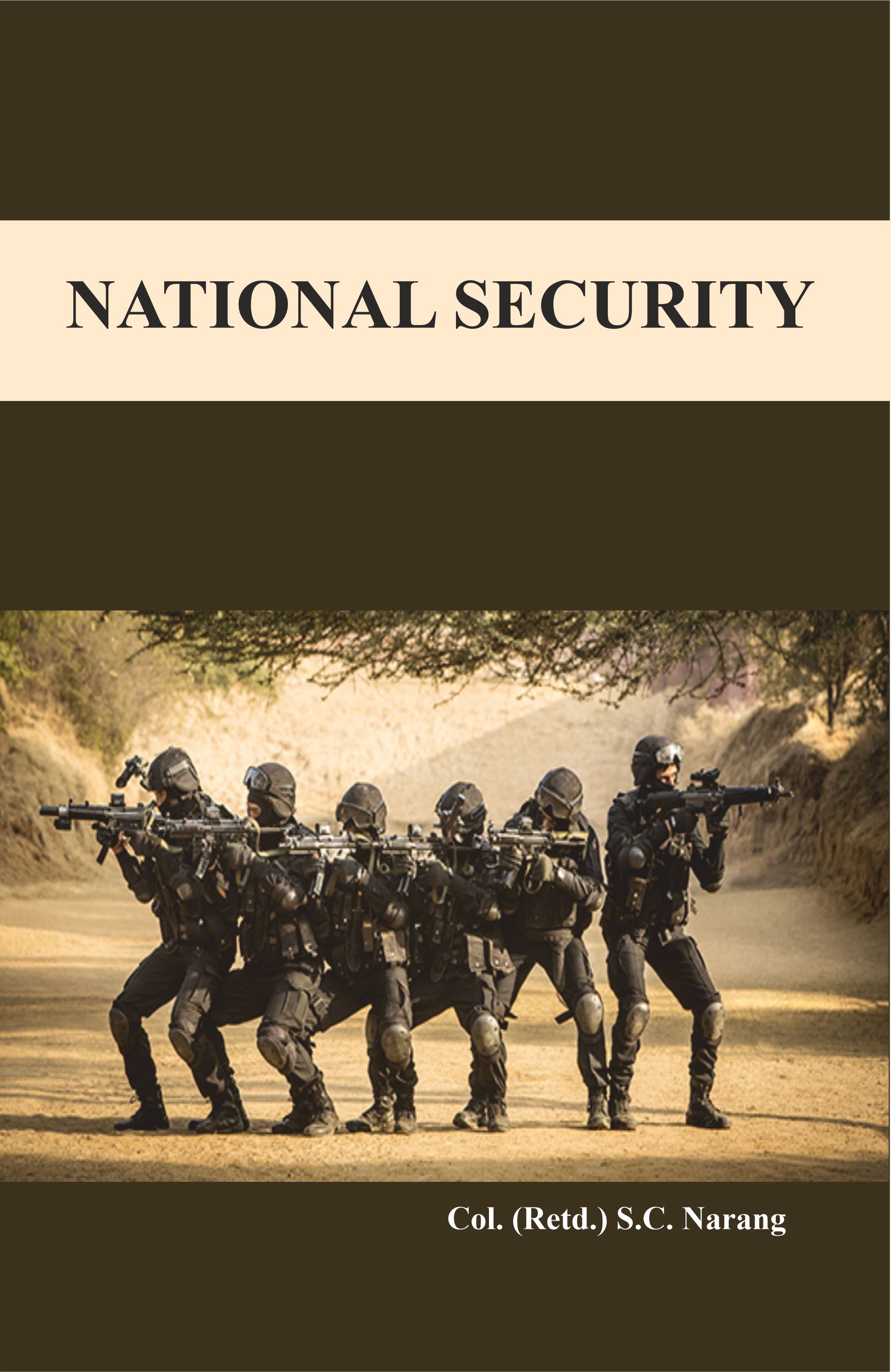
National security is the defence and security of a sovereign state, including its economy, citizens and institutions, which is regarded as a duty of government. Originally conceived as protection against military attack, national security is widely understood to include also non-military dimensions, such as the security from terrorism, minimization of crime, environmental security, energy security, economic security, food security, and cyber-security. Similarly, national security risks include, in addition to the actions of other nation states, action by violent non-state actors, by narcotic cartels, organized crime, by multinational corporations, and also the effects of natural disasters. Governments rely on a range of measures, including political, economic, and military power, as well as diplomacy, to safeguard the security of a nation state. They may also act to build the conditions of security regionally and internationally by reducing transnational causes of insecurity, such as climate change, political exclusion, economic inequality and nuclear proliferation. Modern concepts of national security arose in the 17th century during the Thirty Years War in Europe and the Civil War in England. In 1648, the Peace of Westphalia established the idea that the nationstate had sovereign control not only of domestic affairs such as religion, but also of external security. The idea of the nation-state is commonplace today, yet it would be wrong to assume that it is the only way to look at international security. The preWestphalia international system was based on the assumption that there existed a universal principle governing the affairs of states led by emperors, popes,kings, and princes. That was indeed the principle of the Holy Roman Empire. The new idea of the nationstate took a different approach. Peace and stability could be better served if people were not slaughtering each other over some universal principle—in that case, religion. It would be far better to have an international system based on the equilibrium of nationstates dedicated to the limited purposes of national sovereignty and self-defense.
Col. (Retd.) S.C. Narang Commissioned in Indian Army in ‘Electronics and Mechanical Engineers’ Corps as technical graduate, Colonel (Retd.) S.C. Narang served in various capacities in Army establishments. He was instructor at premiere institutes at Military College of Electronics and Mechanical Engineering as well at EME School Vadodara. Having graduated from regional Engineering College, Durgapur with first class first honours, he latter completed his post-graduation with specializations in Radar and Control Systems and later in Missile Weapons Technology. He underwent specialised training on SAM-6 and SAM-7 missile weapon systems in erstwhile Russia. On account of being missile specialist, he interacted with team of RandD Engineers at Defence RandD laboratory when Dr. A.P.J. Abdul Kalam (Ex-President of India) was the Director. Col. Narang commanded an EME Battalion in counter insurgency operations in JandK when militancy was at its peak during 1991-1993. He retired from active service in 1998 as Director EME, Army HQ, New Delhi.
Preface Chapter 1 India‘s Land and Sea Frontier Chapter 2 Strategic Environment in Indian Ocean Chapter 3 India’s Maritime Strategy Chapter 4 Defence Policy of India Chapter 5 Nuclear Policy of India Chapter 6 Foreign Policy of India Chapter 7 Security Threats Chapter 8 Regional and Global Security Environment Chapter 9 Environment in Post Coldwar Period Chapter 10 Terrorism and National Security of India Chapter 11 Higher Defence Organization of India Chapter 12 Civil-Military Relations of India Chapter 13 Concept of National Security Chapter 14 Concept of National Power and its Elements Chapter 15 Concept of National Interest Chapter 16 Problems and Policy of National Security Chapter 17 India Pakistan Relations with Special Reference to 1947 - 1948 Conflict Chapter 18 Tashkent Agreement Chapter 19 Pakistan’s Nuclear Policy Chapter 20 Kashmir Problem Chapter 21 India’s Relations with South Asian Countries Bibliography

$280.00