
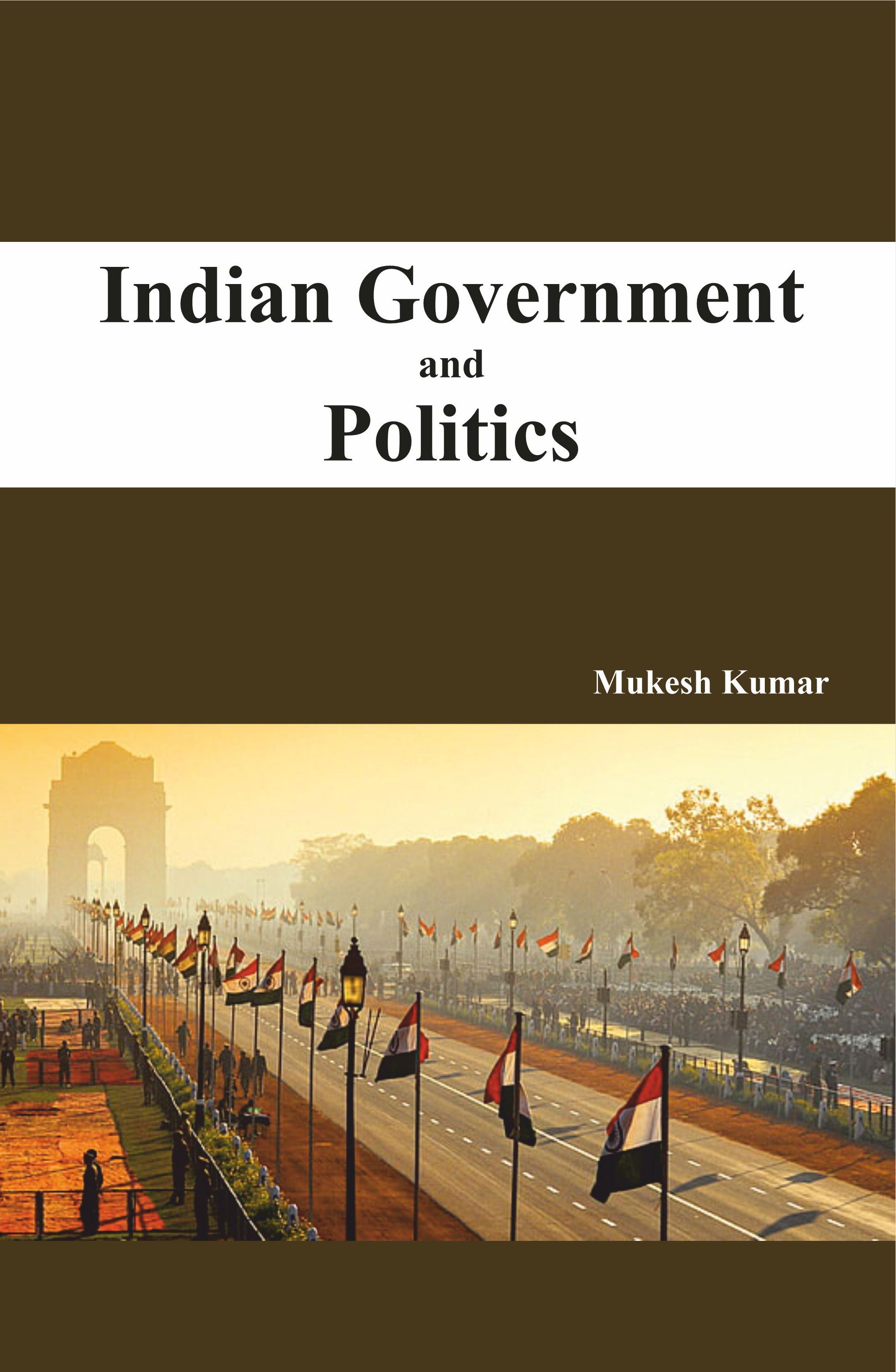
The Government of India, also referred to as the Central Government or simply the Centre, serves as the national authority of the Republic of India, a federal democracy situated in South Asia. It encompasses 28 union states and eight union territories. Headquartered in New Delhi, the government operates through three core branches: the legislative, the executive, and the judiciary. These branches wield their authority through a bicameral Parliament, led by a Prime Minister, and overseen by the Supreme Court. The President holds the position of head of state. In recent times, there has been a notable evolution in the judicial landscape, altering the traditional balance of power. The sovereignty of Parliament has been curtailed as its amendments to the Constitution now face scrutiny and potential intervention by the judiciary. Moreover, the process of judicial appointments has undergone changes, with reduced involvement from the executive or legislative bodies. India's governance adheres to the Westminster system, featuring the executive, legislature, and judiciary. The Prime Minister, Parliament, and the Supreme Court hold powers delineated by the Constitution. The President serves as the head of state and commander-in-chief of the armed forces, while the elected Prime Minister leads the executive and its operations.
Dr. Mukesh Kumar is working as Chairperson and Associate Professor, Department of Political Science, Indira Gandhi University, Meerpur, District Rewari, Haryana. He is M.A., M.Phil., Ph.D, UGC-NET, SLET, HTET in Political Science subject having 16 years teaching experiance. His M.Phil is in Indian Foreign Policy and Ph.D in Indo -Russian Relations. Dr. Mukesh has already written two books. He has 22 research papers published in various national and international journals, more than 50 papers presented in International and National Seminars and have guided seven Ph.D scholars. Dr. Mukesh has been awarded by ESDA – National Environmentalist Award in area of Gauriya bird conservation and contribution in International Relations research. He is and have remain member of various academic and research bodies and his research is quoted by various scholars. He has delivered many Radio -Talks from Akashwani Radio Station, Rohtak, Haryana on the topics of Political Science and Constitution.
Preface Chapter 1 Salient Features of the Indian Constitution Chapter 2 Federalism under the Indian Constitution Chapter 3 Parliament Chapter 4 State Executive Chapter 5 Judicial System in India Chapter 6 Economic Development in India Chapter 7 Party System in India Chapter 8 Evolution of Indian Administration Chapter 9 Panchayat and Economic Development Chapter 10 Constitutional Development of India Chapter 11 Nationalism in India Chapter 12 Fundamental Rights in India Chapter 13 Indian National Movement Bibliography Index

$280.00